
The 12 Rules of Banana Ball: A Simple Guide for New Fans (2026 Edition)
If you’ve seen clips of the Savannah Bananas online, you probably thought:
“Wait… this is baseball?!”
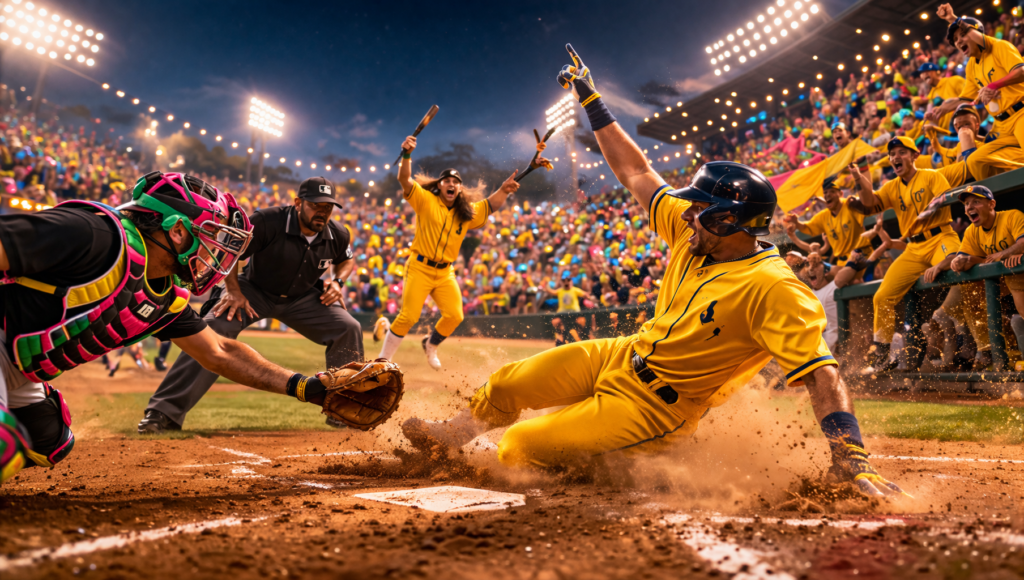
Players dancing. Fans catching balls for outs. Batters running after ball four.
That’s Banana Ball, the fast and fun version of baseball played in the Banana Ball Championship League (BBCL).
The good news?
The rules are actually very simple once you learn them. you can checkout the gameplay explained also
Here’s an easy guide to the 12 main Banana Ball rules for 2026.
for tickets guide and to know about how to avoid scams you may read our tickets guide
#1 Every Inning Counts
In Banana Ball, teams do not just count total runs.
Instead:
- Each inning is worth 1 point
- The team with more runs in that inning gets the point
The last inning is different.
In the final inning, every run equals one point, which allows big comebacks.
#2 Two-Hour Time Limit
Banana Ball games are designed to stay fast.
- Each game has a 2-hour limit
- No new inning can start after 1 hour and 50 minutes
This keeps the game moving and prevents long delays.
#3 No Stepping Out
Batters must stay ready.
If a batter steps out of the batter’s box, the umpire calls a strike.
This rule removes wasted time between pitches.
#4 No Bunting Allowed
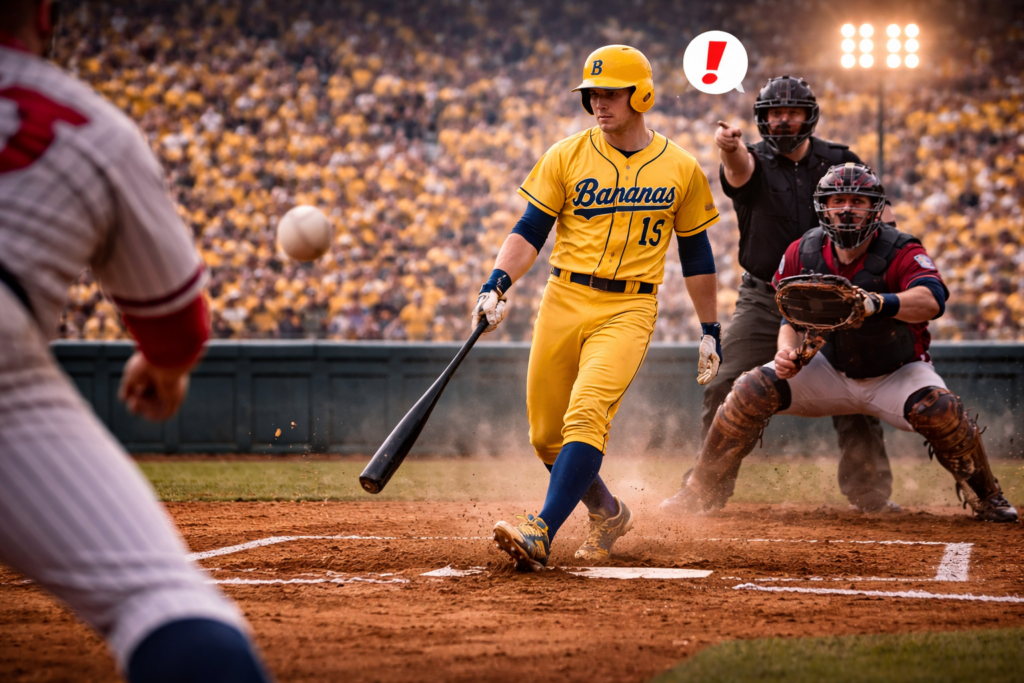
Bunting is banned in Banana Ball.
If a player bunts the ball, they are ejected immediately.
The sport wants hitters to swing and keep the game exciting.
#5 Batters Can Steal First
In Banana Ball, a batter can reach first base without hitting the ball.
If the catcher drops a pitch or the ball gets away, the batter can run to first base immediately.
This keeps pitchers and catchers alert on every pitch.
#6 The Ball-Four Sprint
There are no walks in Banana Ball.
When the pitcher throws ball four, the batter begins a Ball-Four Sprint.
Here is how it works:
- The batter runs immediately
- The ball becomes dead
- The seven fielders (not the pitcher or catcher) must touch the ball in sequence
Only after all seven fielders touch the ball does the play become live again.
Because of this delay, the batter can usually reach second base easily.
#7 No Mound Visits
In traditional baseball, coaches visit the pitcher to talk strategy.
Banana Ball does not allow this.
There are no mound visits, which keeps the game fast.
Pitchers must solve problems on their own.
#8 Fan Catch Out
This is the most famous Banana Ball rule.
If a foul ball goes into the stands and a fan catches it, the batter is out.
The crowd literally becomes part of the defense.
Pro Tip for New Fans
Bring a glove to the game.
If you catch a foul ball in the stands, you might record an out for your team.
Yes, fans really get outs.
#9 Showdown Tiebreaker
If the game is tied, Banana Ball does not play extra innings.
Instead, the teams compete in a Showdown.
A Showdown has three rounds.
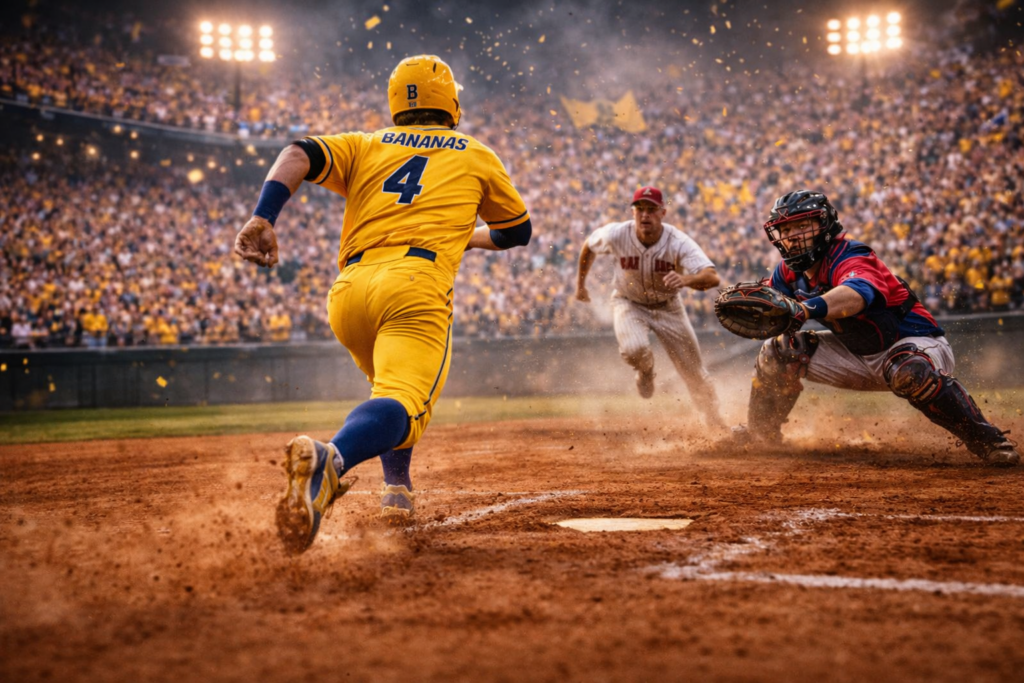
Round 1
- A hitter tries to score
- The defense has a pitcher, catcher, and fielders
Round 2 (The Craziest Round)
- Only the pitcher and catcher defend
- It becomes a wild race between the batter and two defenders
Round 3
- Bases are loaded
- Every run scored equals one point
Teams keep going until one side wins.
#10 The Golden Batter Rule
Once per game, a team can send any hitter in the lineup to bat at any time.
This is called the Golden Batter.
Teams usually use this rule when they need a big hit late in the game.
#11 Pitchers Must Finish the Inning
In Banana Ball, pitchers cannot be swapped out constantly like in traditional baseball. Once a pitcher starts an inning, they usually must finish it. This prevents slow strategy changes and keeps the game moving quickly.
#12-Fan Challenges
Fans now have even more power.
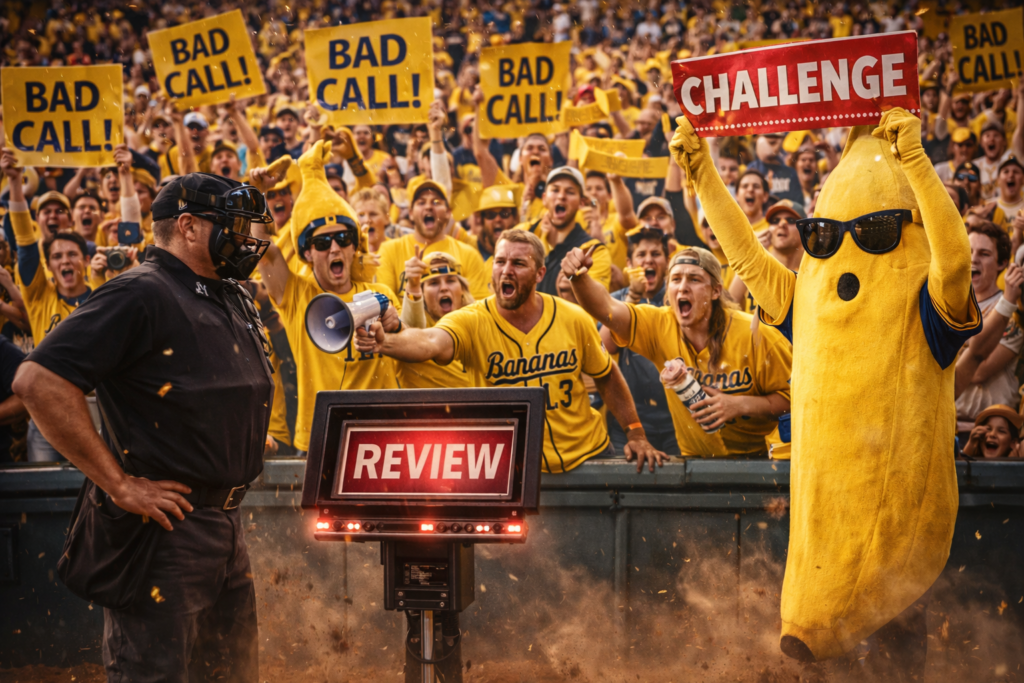
Each game, the crowd can challenge one umpire call.
If fans think the umpire made the wrong decision, they can request a review.
This rule makes the crowd feel even more involved in the game.
Why We Love Banana Ball
Banana Ball became popular because it removes the slow parts of baseball.
Instead of long pauses, the game focuses on:
- fast action
- fan participation
- crazy plays
- constant energy
At any moment:
- a fan might catch a foul ball
- a runner might sprint after ball four
- a Golden Batter might appear
That’s why Banana Ball feels less like a traditional sports game and more like a high-energy baseball show.
And once you understand the rules, watching it becomes even more fun.